
Montessori at Home
- Cassandra Kubiak
- Jan 27
- 4 min read
When one thinks of Montessori, they often think of the early years branching out of infancy and exploring the life of toddlerhood. Maria Montessori studied development from infancy through the age of twenty-four and established the Four Planes of Development. After having a basic understanding of the Four Planes of Development, you’ll begin to see that Montessori practices can be implemented at home starting as early as infancy and all the way through your child’s educational years. So how does one begin to implement Montessori at home?
The answer to this question could be a book’s length. But today, we will explore two shifts that welcome the foundations of Montessori and support your learner at home.
The Environment
“The environment must be rich in motives which lend interest to activity and invite the child to conduct his own experiences” – Maria Montessori

A prepared environment builds the foundation for exploration, curiosity and independence. A prepared environment looks like one that can be used independently, is uncluttered, and well-maintained (clean and orderly).
For infants, this could look like a clean floor with black and white photos at their eye level, a mirror to observe their body, a very short basket with a couple of items for them to safely explore and a book they can independently grab and begin to learn how to navigate through.
For toddlerhood, this could look like low open shelves with items carefully set out for them to grab (such as building blocks, puzzles, or paper and scissors) a space where they can independently navigate and use to work/play and pictures and books at their eye level.
For elementary, the shelf level is adjusted, the pictures are moved up, and the books transition to a mix of picture books to early readers. As the learner progresses, the materials on the self are changed out and the books advance.
Montessori is rooted in structure and order and the beautification of the environment. There should be a great emphasis on the care and respect for one’s environment (order) and the careful act of placement of items (structure and beauty). Your home or setup does not need to be new in order to do this. Instead, the focus is on creating a sense of peace within the space through uncluttered and well-maintained spaces, in order to invite your learner to use the space.
Embracing Independence
Second, we will explore how we can embrace your learner’s independence at home. Maria Montessori says, “Never help a child with a task at which he feels he can succeed.”
In order to not help, we have to give our learners the time to work and do independently. In doing so, we foster the development of concentration. As Maria Montessori says, “The first essential for the child’s development is concentration.”
To foster independence and the depths of concentration, we must not interrupt the work of our learner.
"If a child's cycle of activity is interrupted, the results are a deviation of behavior, aimlessness, and loss of interest...So whatever intelligent activity we witness in a child - even if it seems absurd to us...we must not interfere; for the child must be able to finish the cycle of activity on which his heart is set." -Maria Montessori
Creating opportunities of independence should be done with intention. This often means we need to slow down, provide more time, and allow for your learner to self-correct. As parents in a busy and ever demanding world, this can feel hard. In your home, you can decide where this best fits and when. Maybe the space is built in for your learner to put their shoes on and hang up their coat when they leave and arrive home every time. One helpful tip is to limit the options your child has so that they only have good choices to make: put away their flip-flops on chilly mornings, and put out their rainboots on wet mornings.
The independence offered to them can be curated to meet your needs, as a parent, by the parent facilitating what is on their shelf. It is possible that some evenings you have the opportunity for your learner to cook/bake with you, but not other times. Establishing where independence is consistently practiced, will help build the independence around these tasks and will foster the concentration needed for tasks that you can do with them on occasion.
Preparing your learners environment and embracing independence where you can, are great places to begin practicing Montessori at home. It is important to note that Montessori at home is most strongly about finding little ways to help your child be independent, rather than it being about having a particular aesthetic or expensive toys. Montessori isn’t a trend, it's a lifestyle.
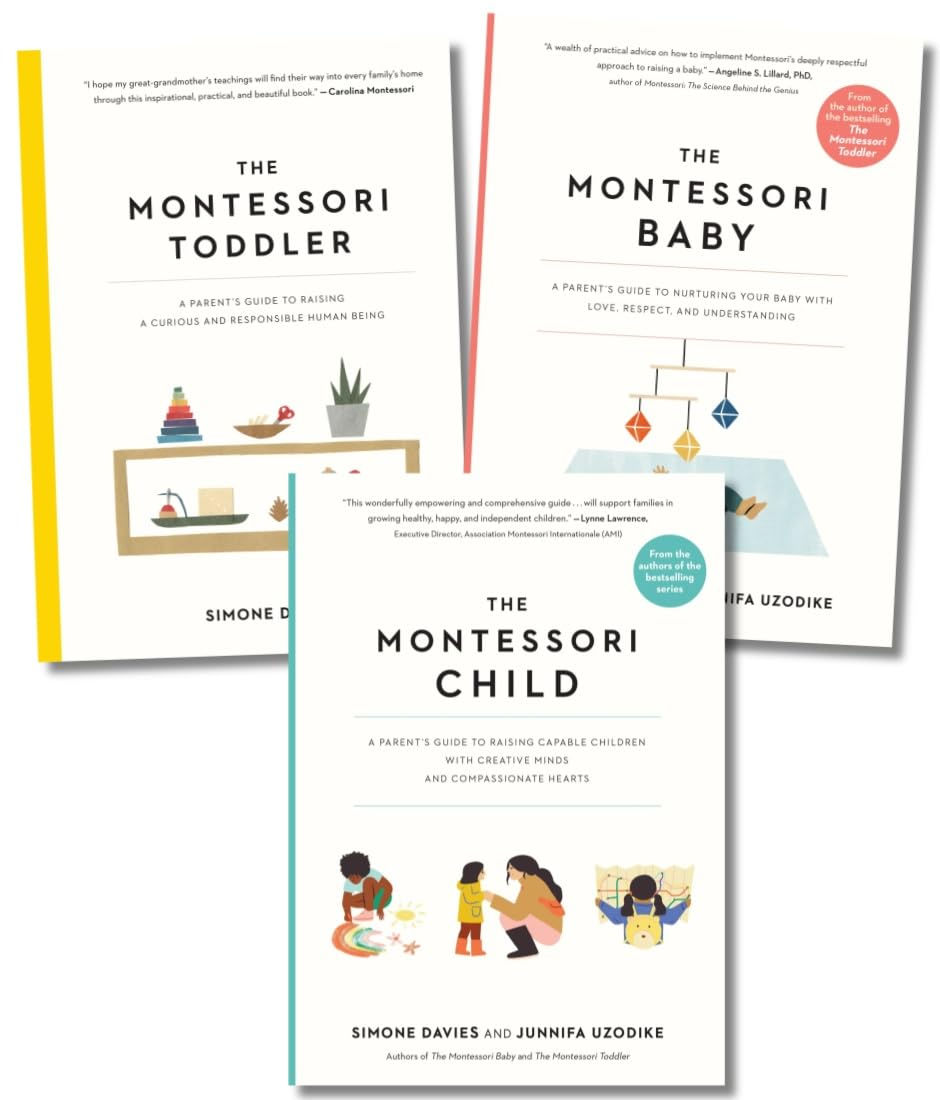
If you would like to read more in depth about implementing Montessori at Home, our staff here at Goldenrod Montessori recommend the following book(s): The Montessori Baby, The Montessori Toddler, and The Montessori Child, all written by Simone Davies.
Stay tuned, as we have an upcoming blog extending our understanding on Peace Education and following that blog, we will discuss Building Intrinsic Motivation at Home. If you are finding our blogs helpful, please follow us on social media, sign up for our newsletter, and watch for our next blog post.


Comments